
What UK Businesses Need to Know to Stay Compliant
With increasing environmental regulations across the UK and Europe, F-Gas regulations have become a critical consideration for businesses operating refrigeration and air conditioning systems. Designed to reduce greenhouse gas emissions, these laws directly impact how companies manage and maintain their equipment.
Achieving commercial refrigeration compliance is no longer just about operational efficiency , it’s a legal requirement. Businesses must understand cooling system regulations to avoid penalties, reduce environmental impact, and ensure long-term system performance.
Why F-Gas Regulations Matter for Businesses
Legal and Environmental Responsibilities
Compliance with F-Gas regulations is a legal obligation for businesses using refrigeration or air conditioning systems containing F-gases. Failure to comply can lead to serious consequences, including fines and operational restrictions.
From an environmental perspective, these regulations help:
- Lower greenhouse gas emissions
- Promote sustainable refrigeration practices
- Support national and global climate targets
For businesses, maintaining commercial refrigeration compliance ensures both legal protection and environmental responsibility.
Key Requirements for Commercial Refrigeration Compliance
To meet F-Gas regulations, businesses must adhere to several important requirements:
1. Leak Detection and Repair
Regular leak checks are mandatory, depending on the size and type of the system. Any detected leaks must be repaired promptly by certified professionals.
2. Record Keeping
Businesses must maintain detailed records of:
- Refrigerant usage
- Maintenance activities
- Leak inspections
These records are essential for demonstrating commercial refrigeration compliance during audits.
3. Certified Personnel
Only qualified engineers with F-Gas certification are permitted to handle refrigerants and perform maintenance tasks.
4. Proper Labelling
Systems must be clearly labelled with information about the type and quantity of refrigerant used.
The Phase-Down of High-GWP Refrigerants
A key component of F-Gas regulations is the gradual reduction (phase-down) of high-GWP refrigerants. This means:
- Limited availability of certain refrigerants
- Increased costs for high-GWP gases
- Greater emphasis on alternative solutions
Businesses relying on older systems may face rising operational costs and supply challenges. Transitioning to compliant systems is essential for long-term sustainability.
Risks of Non-Compliance
Failing to meet cooling system regulations can result in significant risks:
Financial Penalties
Non-compliance can lead to fines imposed by regulatory authorities.
Operational Disruption
Systems that do not meet standards may be restricted or shut down.
Reputational Damage
Businesses that fail to meet environmental standards risk losing customer trust.
Increased Costs
Inefficient systems and refrigerant leaks can drive up energy and maintenance expenses.
Ensuring commercial refrigeration compliance helps mitigate these risks and protects business continuity.
The Role of Sustainable Refrigeration in Compliance
Adopting sustainable technologies is one of the most effective ways to meet cooling system regulations. Systems using natural refrigerants such as CO₂ or ammonia:
- Have significantly lower GWP
- Reduce environmental impact
- Align with long-term regulatory goals
By transitioning to sustainable solutions, businesses can achieve commercial refrigeration compliance while improving efficiency and reducing costs.
How Green Cooling Can Help
Green Cooling provides expert support to help businesses navigate F-Gas regulations and achieve full compliance. Their services include:
- System audits and compliance assessments
- Installation of low-GWP refrigeration systems
- Ongoing maintenance and leak detection
- Regulatory guidance and documentation support
With extensive industry experience, Green Cooling ensures your systems meet all cooling system regulations while optimising performance.
Conclusion
Understanding and complying with F-Gas regulations is essential for any business operating commercial cooling systems. From legal obligations to environmental responsibility, these regulations play a crucial role in shaping the future of refrigeration.
By prioritising commercial refrigeration compliance and staying ahead of evolving cooling system regulations, businesses can avoid costly penalties, improve efficiency, and contribute to a more sustainable future.
Contact Green Cooling today to ensure your refrigeration systems are fully compliant and operating at peak efficiency.
What Are F-Gas Regulations?
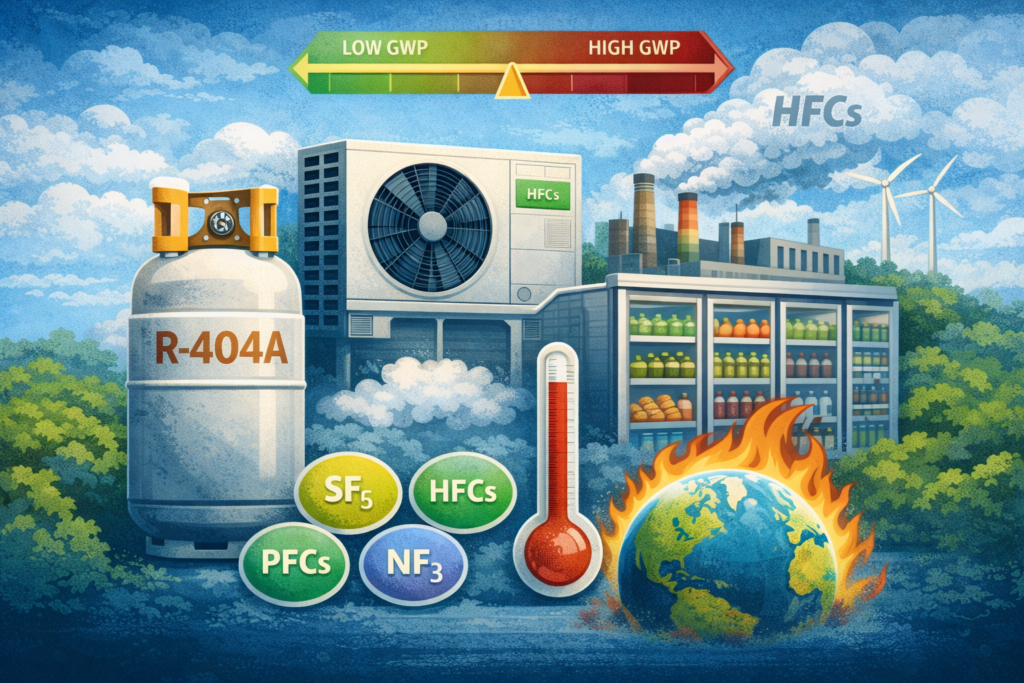
F-Gas regulations refer to laws governing the use of fluorinated gases (F-gases), which are commonly used in refrigeration and air conditioning systems. These gases, including HFCs (hydrofluorocarbons), have a high Global Warming Potential (GWP) and contribute significantly to climate change.
The UK’s F-Gas framework, retained from EU legislation post-Brexit, aims to:
- Gradually phase down high-GWP refrigerants
- Reduce emissions from existing systems
- Encourage the adoption of low-GWP alternatives
Understanding these cooling system regulations is essential for any business relying on commercial refrigeration.
Frequently Asked Questions
1. What are F-Gas regulations and who do they apply to?
F-Gas regulations are laws designed to control the use of fluorinated gases in refrigeration and air conditioning systems. They apply to businesses that operate, maintain, or service such equipment, requiring them to follow strict guidelines to reduce emissions and ensure environmental and legal compliance.
2. What is commercial refrigeration compliance?
Commercial refrigeration compliance refers to meeting all legal and environmental requirements related to refrigeration systems, including leak checks, record keeping, and proper maintenance. It ensures systems operate safely, efficiently, and within the framework of F-Gas regulations and other cooling system regulations in the UK.
3. How often should F-Gas leak checks be carried out?
Leak check frequency depends on the size and type of the system and the amount of refrigerant used. Systems with higher CO₂ equivalent charges require more frequent inspections. Regular checks are essential to detect leaks early, maintain efficiency, and ensure compliance with F-Gas regulations.
4. What happens if a business fails to comply with F-Gas regulations?
Non-compliance can result in financial penalties, legal action, and operational disruptions. Businesses may also face increased costs due to inefficiencies and refrigerant loss. Additionally, failing to meet environmental standards can harm a company’s reputation and impact customer trust and long-term business success.
5. Are businesses required to keep records under F-Gas regulations?
Yes, businesses must maintain detailed records of refrigerant usage, maintenance activities, and leak inspections. These records are essential for demonstrating compliance during audits and inspections, ensuring transparency and accountability in managing refrigeration systems under current cooling system regulations.
6. How can businesses reduce the impact of F-Gas regulations?
Businesses can reduce the impact by upgrading to low-GWP refrigerants, improving system efficiency, and implementing regular maintenance programmes. Working with experienced professionals helps identify opportunities for improvement and ensures systems remain compliant while reducing operational and environmental costs.
7. What are the alternatives to high-GWP refrigerants?
Natural refrigerants such as CO₂, ammonia, and hydrocarbons are popular alternatives to high-GWP gases. These options have significantly lower environmental impact and are increasingly used in modern refrigeration systems, helping businesses meet regulatory requirements and achieve long-term sustainability goals.