
Why Low-GWP Refrigerants Are Shaping the Future of Cooling
As environmental concerns and regulatory pressures continue to reshape the refrigeration industry, natural refrigerants are rapidly emerging as the preferred solution for businesses seeking long-term sustainability. With increasing scrutiny on high Global Warming Potential (GWP) gases, organisations across the UK and Europe are transitioning toward low GWP refrigerants to future-proof their operations.
Modern sustainable refrigeration systems not only reduce environmental impact but also enhance energy efficiency and operational performance. For industries such as retail, hospitality, and food distribution, adopting natural refrigerants is no longer optional; it’s essential for compliance and competitiveness.
Why Natural Refrigerants Are the Future of Cooling
Environmental Benefits of Low GWP Refrigerants
The primary advantage of low GWP refrigerants lies in their minimal contribution to climate change. Traditional refrigerants can have GWPs in the thousands, whereas natural refrigerants often have a GWP close to zero.
Key environmental benefits include:
- Reduced greenhouse gas emissions
- No ozone depletion potential (ODP)
- Lower carbon footprint for businesses
Switching to natural refrigerants is one of the most effective ways companies can align with global climate targets and sustainability goals.
Compliance with UK and EU Regulations
Regulatory frameworks such as the UK F-Gas Regulations and the EU F-Gas Regulation are driving the phase-down of high-GWP refrigerants. These laws impose strict quotas and bans on certain synthetic gases, pushing businesses toward low GWP refrigerants.
Failure to comply can result in:
- Financial penalties
- Restricted system usage
- Increased maintenance costs
By adopting natural refrigerants, businesses can ensure compliance while avoiding costly system retrofits in the future.
Energy Efficiency and Cost Savings
Beyond environmental benefits, sustainable refrigeration systems using natural refrigerants often deliver superior energy performance.
Key Efficiency Advantages:
- Improved heat transfer properties
- Lower operating temperatures
- Reduced energy consumption
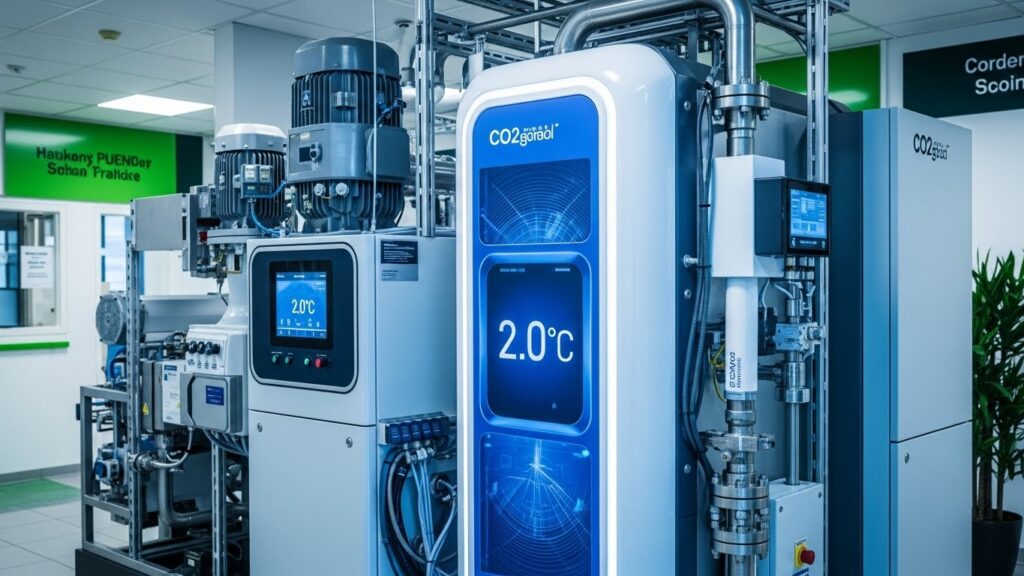
For example, CO₂ refrigeration systems are particularly efficient in cooler climates like the UK, making them an ideal choice for supermarkets and cold storage facilities.
Over time, businesses can benefit from:
- Lower energy bills
- Reduced total cost of ownership
- Enhanced system reliability
Applications of Natural Refrigerants
Natural refrigerants are now widely used across multiple sectors:
Retail Refrigeration
Supermarkets are increasingly adopting CO₂ systems for display cases and cold storage.
Cold Storage & Warehousing
Ammonia-based systems provide powerful and efficient cooling for large-scale storage.
Food & Beverage Industry
Hydrocarbons are commonly used in smaller systems such as beverage coolers.
Challenges and Considerations
While the benefits are clear, implementing natural refrigerants does come with certain challenges:
System Design Requirements
Natural refrigerants often require specialised system designs and components.
Safety Considerations
Some refrigerants, such as ammonia and hydrocarbons, require careful handling due to toxicity or flammability.
Initial Investment
Upfront costs can be higher, although these are typically offset by long-term savings.
Working with experienced providers like Green Cooling ensures that systems are designed, installed, and maintained to the highest safety and efficiency standards.
The Role of Innovation in Sustainable Refrigeration
Technological advancements are making low GWP refrigerants more accessible and efficient than ever before. Innovations include:
- Transcritical CO₂ systems
- Advanced leak detection technologies
- Smart energy monitoring systems
These developments are accelerating the adoption of natural refrigerants across industries, making sustainable cooling more practical and cost-effective.
How Green Cooling Supports Sustainable Refrigeration
Green Cooling specialises in delivering cutting-edge sustainable refrigeration solutions tailored to commercial needs. Their expertise includes:
- Design and installation of natural refrigerant systems
- Energy-efficient system optimisation
- Ongoing maintenance and compliance support
By partnering with Green Cooling, businesses can seamlessly transition to low GWP refrigerants while maximising performance and sustainability.
Final Thoughts
The shift toward natural refrigerants is transforming the refrigeration industry, driven by environmental responsibility, regulatory compliance, and the need for energy efficiency. Businesses that embrace low GWP refrigerants today are not only reducing their environmental impact but also securing long-term operational benefits.
As sustainable refrigeration becomes the industry standard, now is the time to invest in future-ready cooling solutions.
Contact Green Cooling today to learn more about our sustainable refrigeration solutions and how we can help your business transition to natural refrigerants.
What Are Natural Refrigerants?
Natural refrigerants are substances that occur naturally in the environment and can be used in cooling systems without causing significant harm to the atmosphere. The most commonly used natural refrigerants include:
- Carbon dioxide (CO₂)
- Ammonia (NH₃)
- Hydrocarbons (e.g., propane, isobutane)
Unlike synthetic refrigerants such as HFCs, these alternatives have negligible or very low GWP, making them ideal for sustainable refrigeration applications.
FAQs
1. What are natural refrigerants and why are they important?
Natural refrigerants are substances like CO₂, ammonia, and hydrocarbons that occur naturally and have minimal environmental impact. They are important because they offer a sustainable alternative to synthetic refrigerants, helping reduce greenhouse gas emissions while supporting compliance with environmental regulations and improving overall system efficiency.
2. What does low GWP mean in refrigeration?
Low GWP refers to refrigerants with a low Global Warming Potential, meaning they contribute less to climate change compared to traditional gases. Using low GWP refrigerants helps businesses reduce their carbon footprint and comply with UK and EU F-Gas regulations while improving sustainability and long-term operational efficiency.
3. Are natural refrigerants safe to use?
Yes, natural refrigerants are safe when systems are properly designed and maintained. While some, like ammonia or hydrocarbons, require specific safety measures, modern technology and professional installation ensure safe operation. Partnering with experienced providers ensures compliance with safety standards and reliable system performance.
4. How do natural refrigerants improve energy efficiency?
Natural refrigerants have excellent thermodynamic properties, allowing systems to operate more efficiently. This leads to lower energy consumption and reduced operating costs. In climates like the UK, CO₂ systems perform particularly well, making them an energy-efficient choice for commercial refrigeration applications.
5. Are natural refrigerants more expensive to install?
Initial installation costs for natural refrigerant systems can be higher due to specialised equipment and design requirements. However, these costs are often offset by long-term savings through reduced energy consumption, lower maintenance needs, and compliance with future regulations, making them a cost-effective investment.
6. Which industries benefit most from natural refrigerants?
Industries such as retail, food processing, cold storage, and hospitality benefit significantly from natural refrigerants. These sectors rely heavily on refrigeration and can achieve substantial energy savings, improved sustainability, and regulatory compliance by adopting low GWP refrigerants in their cooling systems.
7. How can businesses transition to natural refrigerants?
Businesses can transition by working with experts who assess current systems and recommend suitable natural refrigerant solutions. This may involve system upgrades or new installations. Professional guidance ensures compliance, safety, and optimal performance while helping businesses achieve their sustainability and energy efficiency goals.