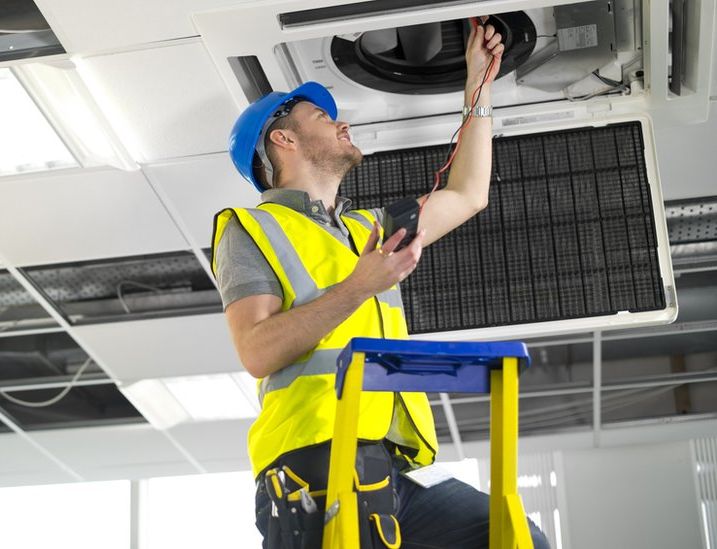
How Efficiency and Innovation Are Shaping Tomorrow’s Systems
Commercial buildings are among the largest energy consumers in the UK, and cooling systems are a significant contributor to overall consumption. As businesses look to reduce costs, meet sustainability targets, and comply with regulations, sustainable cooling has become a priority.
Innovative solutions are emerging that combine energy efficiency, low-carbon technologies, and smart controls. These advancements are shaping the future of cooling systems in commercial HVAC and delivering both environmental and financial benefits.
Innovations Driving Future Cooling Systems
Several innovations are transforming commercial HVAC and defining the next generation of sustainable cooling:
- Smart controls and IoT integration: Sensors optimise cooling based on real-time occupancy and weather conditions
- Variable refrigerant flow systems: Adjust cooling output to match demand, improving efficiency
- Heat recovery technologies: Reuse waste energy to reduce overall energy consumption
- Low-carbon refrigerants: Reduce environmental impact and comply with UK regulatory requirements
These innovations enable buildings to operate sustainably without compromising occupant comfort. Energy consumption can be proactively managed, helping businesses reduce both operating costs and carbon footprint.
Regulatory Drivers in the UK
UK regulations increasingly require commercial buildings to improve energy performance and demonstrate compliance. MEES (Minimum Energy Efficiency Standards) and building performance disclosure requirements directly influence leasing, sale, and operational decisions.
Sustainable cooling technologies support compliance by:
- Reducing energy consumption to meet efficiency targets
- Providing evidence of performance through monitoring and reporting
- Aligning with long-term sustainability strategies
Investing in sustainable cooling prepares commercial properties for both current and future regulations while demonstrating environmental responsibility.
Benefits for Commercial Buildings
Adopting sustainable cooling systems delivers multiple advantages:
- Lower energy costs through improved efficiency
- Reduced environmental impact and carbon emissions
- Enhanced occupant comfort with consistent temperatures
- Improved building value through regulatory compliance
- Actionable insights via integrated monitoring and control systems
For hotels, restaurants, and office buildings, these benefits translate into operational savings, improved guest or occupant satisfaction, and stronger sustainability credentials.
Green Cooling in Action
Green Cooling has helped commercial clients implement future-ready cooling systems that combine energy-efficient equipment, smart controls, and ongoing performance monitoring.
Their solutions have shown measurable results, including reduced energy consumption, lower operating costs, and improved reliability. This demonstrates how sustainable cooling is not just a theoretical concept but a practical, cost-effective strategy for commercial buildings.
Preparing for the Future
To implement sustainable cooling, commercial building operators should:
- Conduct energy audits to identify inefficiencies
- Explore energy-efficient cooling solutions suitable for their building type
- Integrate monitoring systems to track performance and consumption
- Consider low-carbon technologies and smart controls
- Plan upgrades to meet regulatory compliance and sustainability goals
Taking these steps ensures buildings remain comfortable, efficient, and sustainable for years to come.
Conclusion
The future of sustainable cooling in commercial buildings lies in efficiency, innovation, and data-driven decision-making. By adopting energy-efficient technologies and smart controls, businesses can reduce operating costs, lower carbon emissions, and enhance occupant comfort.
For practical implementation, Green Cooling provides tailored solutions for commercial properties, ensuring energy efficiency and system reliability are achieved today while preparing for the demands of tomorrow.
Understanding Sustainable Cooling
Sustainable cooling focuses on reducing energy use, lowering carbon emissions, and enhancing system performance. For commercial properties, this can include:
- Energy-efficient chillers and air handling units
- Smart controls and sensors that adjust performance based on occupancy and environmental conditions
- Use of low-global-warming-potential refrigerants
- Integration with monitoring systems to track energy use and performance
Hospitality, retail, and office buildings can all benefit from these measures. For tailored solutions, Green Cooling provides energy-efficient cooling systems designed for commercial operations.